Joined the project during the initial proposal phase, contributing to concept design and visual proposals used to secure the project.
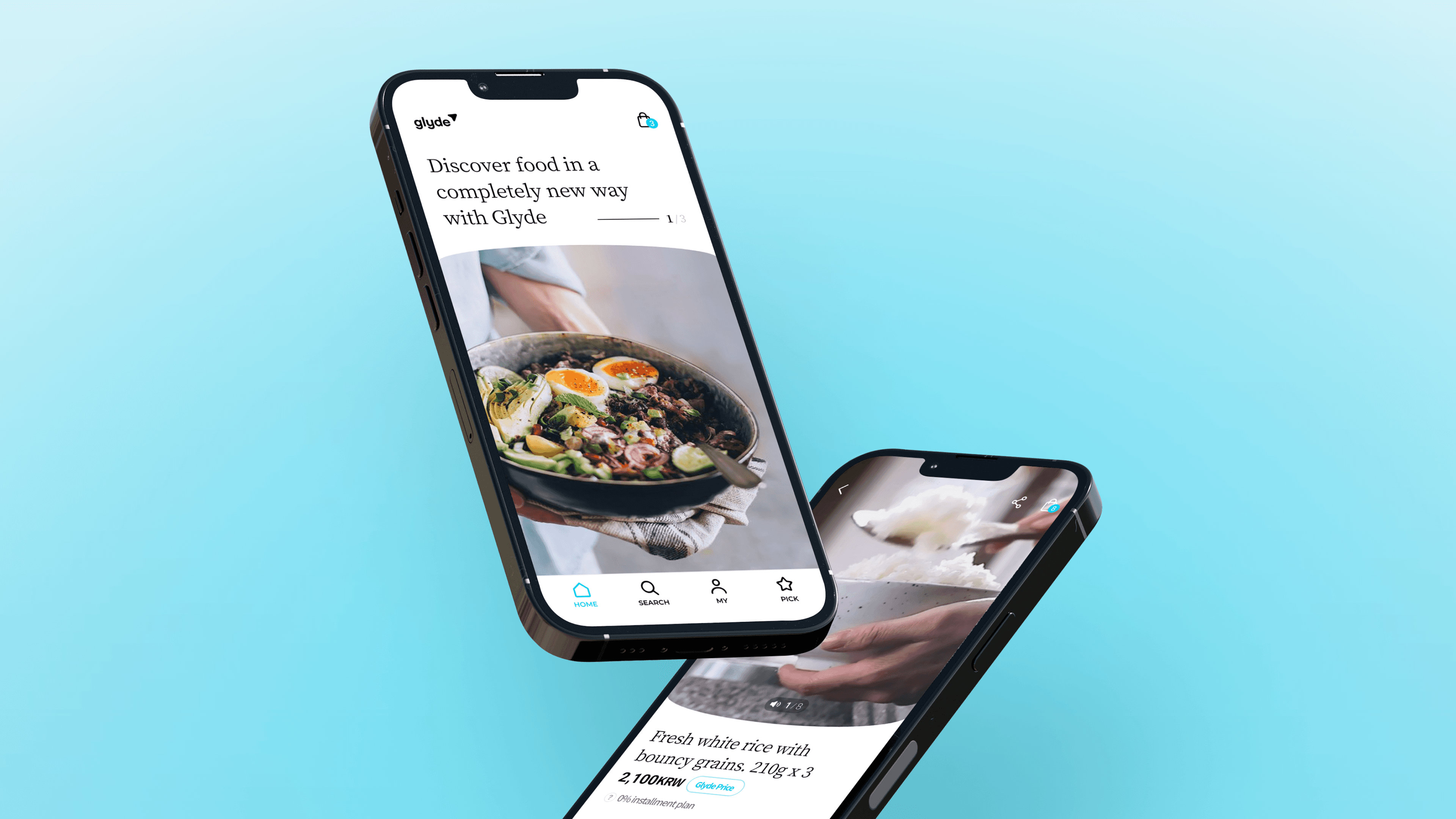
Glyde is a D2C commerce platform built on a simple idea: by removing unnecessary marketing layers and intermediary distribution, more value can be returned directly to consumers.
Participated in research planning and design direction definition, with a primary focus on GUI design for the mobile product. Took full ownership of the icon and illustration system, designing a cohesive icon set applied consistently across the platform.
Duration
April – October 2019
Role
Product Designer
Contribution
Joined the project from the initial proposal phase, contributing to concept design and visual proposal materials used to secure the project.
Participated in planning user research and aligning early design directions with business goals and brand positioning.
Contributed primarily to GUI design across the mobile e-commerce experience, including product discovery, product detail, and purchasing-related screens.
Took full ownership of icon and illustration design, creating a cohesive icon set applied consistently across the product to improve clarity and visual consistency.
Collaborated closely with other designers and engineers to ensure visual designs were feasible, consistent, and aligned with the overall design system.
Team
Product Owner (1)
Project Manager (1)
UX Researchers (2)
Product Designers (4)
Client
Glyde (Harim)
Belong
RightBrain
Project Overview
Glyde is a D2C e-commerce platform built to return value to consumers by removing unnecessary marketing layers and intermediary distribution.
The project aimed to translate this business philosophy into a clear, trustworthy, and easy-to-use mobile shopping experience, particularly for everyday grocery purchases.
Context & Challenge
In mobile grocery commerce, users often face unnecessary complexity caused by layered distribution, aggressive promotions, and visually cluttered interfaces.
These factors reduce trust, clarity, and efficiency, making everyday purchases feel heavier than they need to be.
My Role & Scope
I joined the project from the initial proposal phase as part of the design team, contributing to concept design and visual proposal materials that helped secure the project.
After project kickoff, I participated in research planning and early design direction discussions, then focused primarily on GUI design across the mobile experience.
I also took full ownership of icon and illustration design, creating a cohesive icon set applied consistently throughout the product.
Design Principles
01
Focus on essentials rather than features
02
Reduce visual and cognitive noise during shopping
03
Build trust through clarity, not persuasion
04
Support the brand with a friendly but restrained visual tone
Design Solutions
Translating design principles into practical UI decisions that simplify everyday grocery shopping.
Design Solution 1
Designing for Fast Decisions
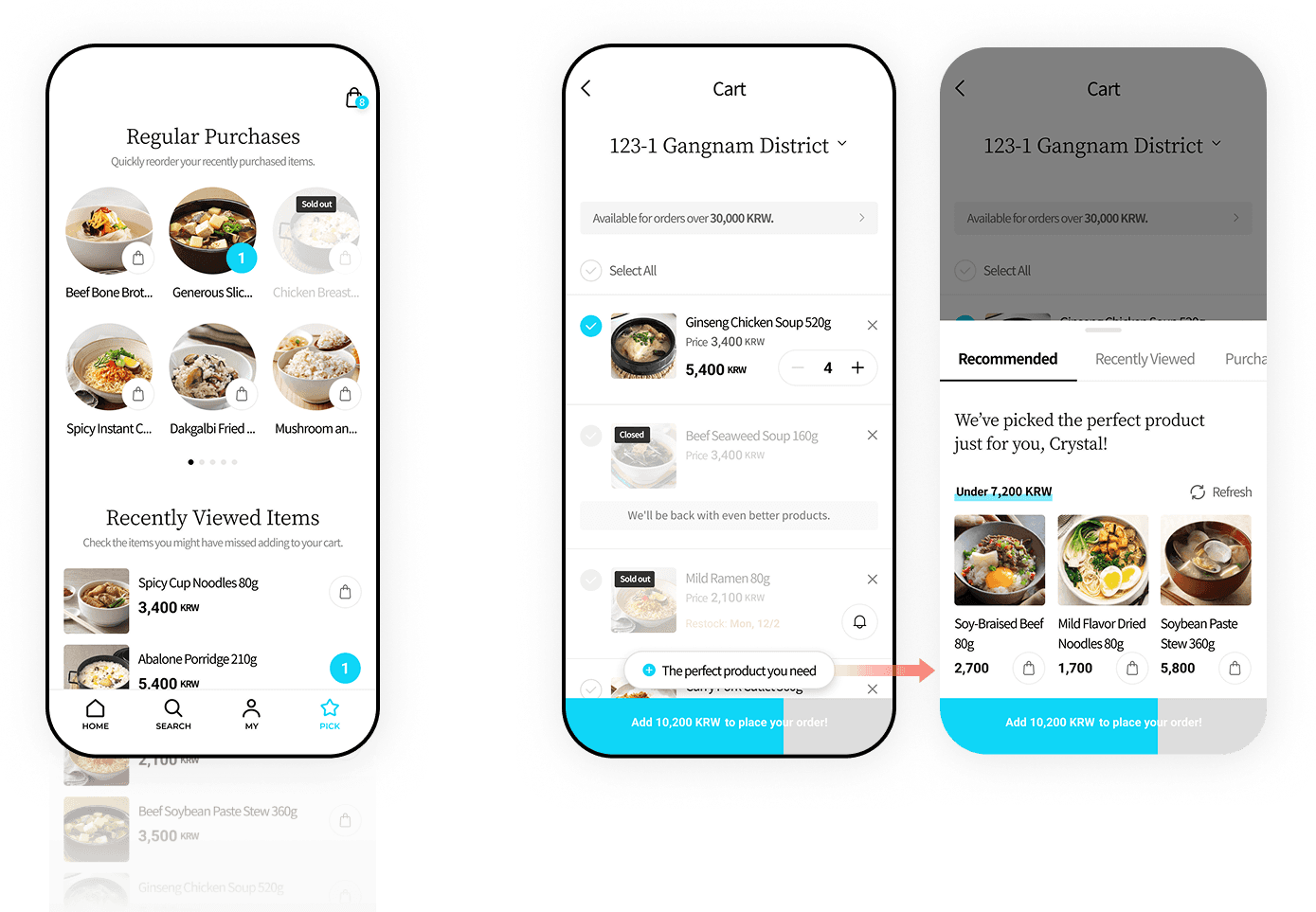
From recognition → action → confirmation, without detours.
Decision Context
In everyday grocery shopping, users often already know what they want. The real decision is whether they can act immediately or need to think again.
Regular Purchases → Repeat without thinking
Cart → Act without leaving context
Recommended → Decide without searching
Design Response
The interface prioritizes immediate actions over feature discovery, allowing users to repeat, add, or adjust items without leaving the current browsing context.
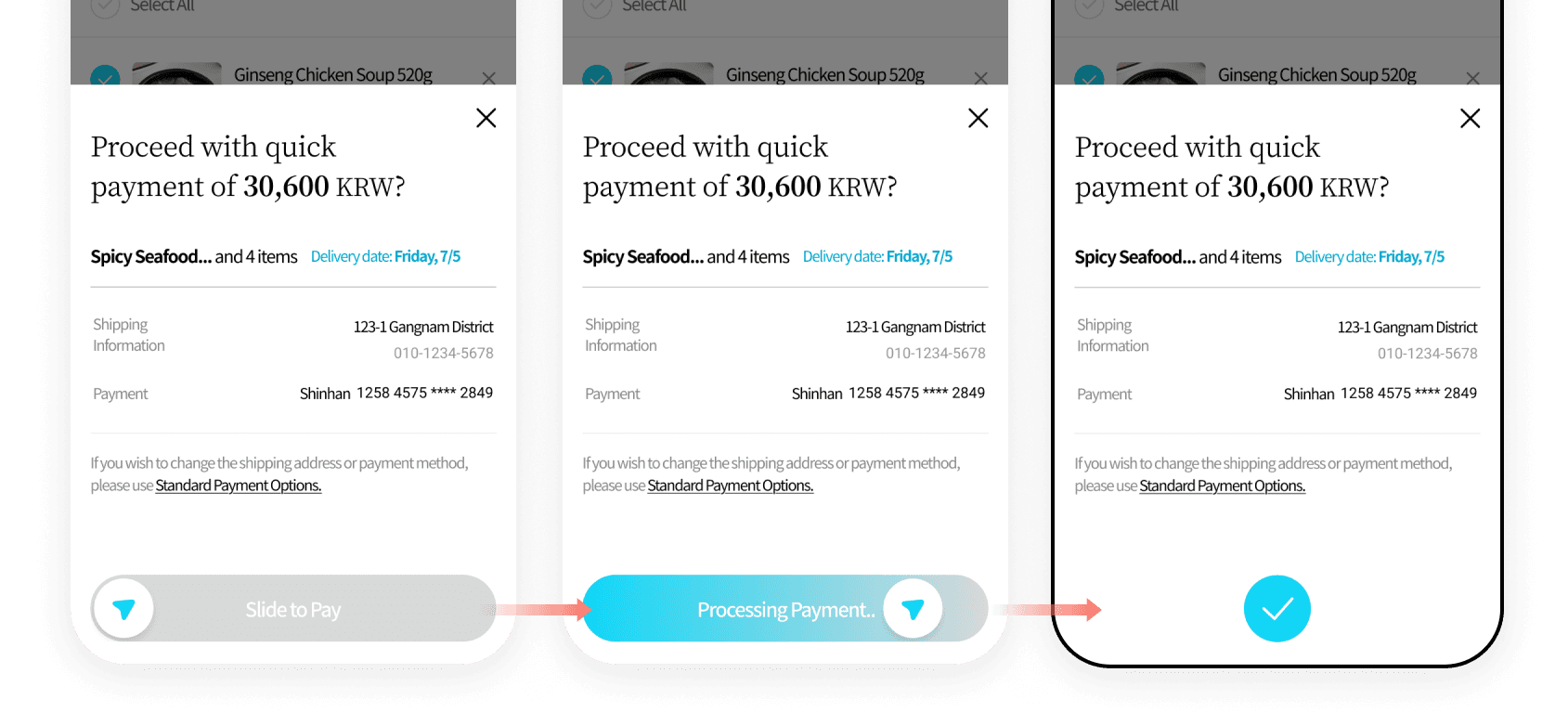
The final step feels like confirmation, not reconsideration.
Confirming without hesitation
Instead of introducing another decision point, the payment flow reinforces confidence by letting users confirm what they already decided.
The UI reduces hesitation by making the next action obvious.
Design Solution 2
Reduce visual and cognitive noise
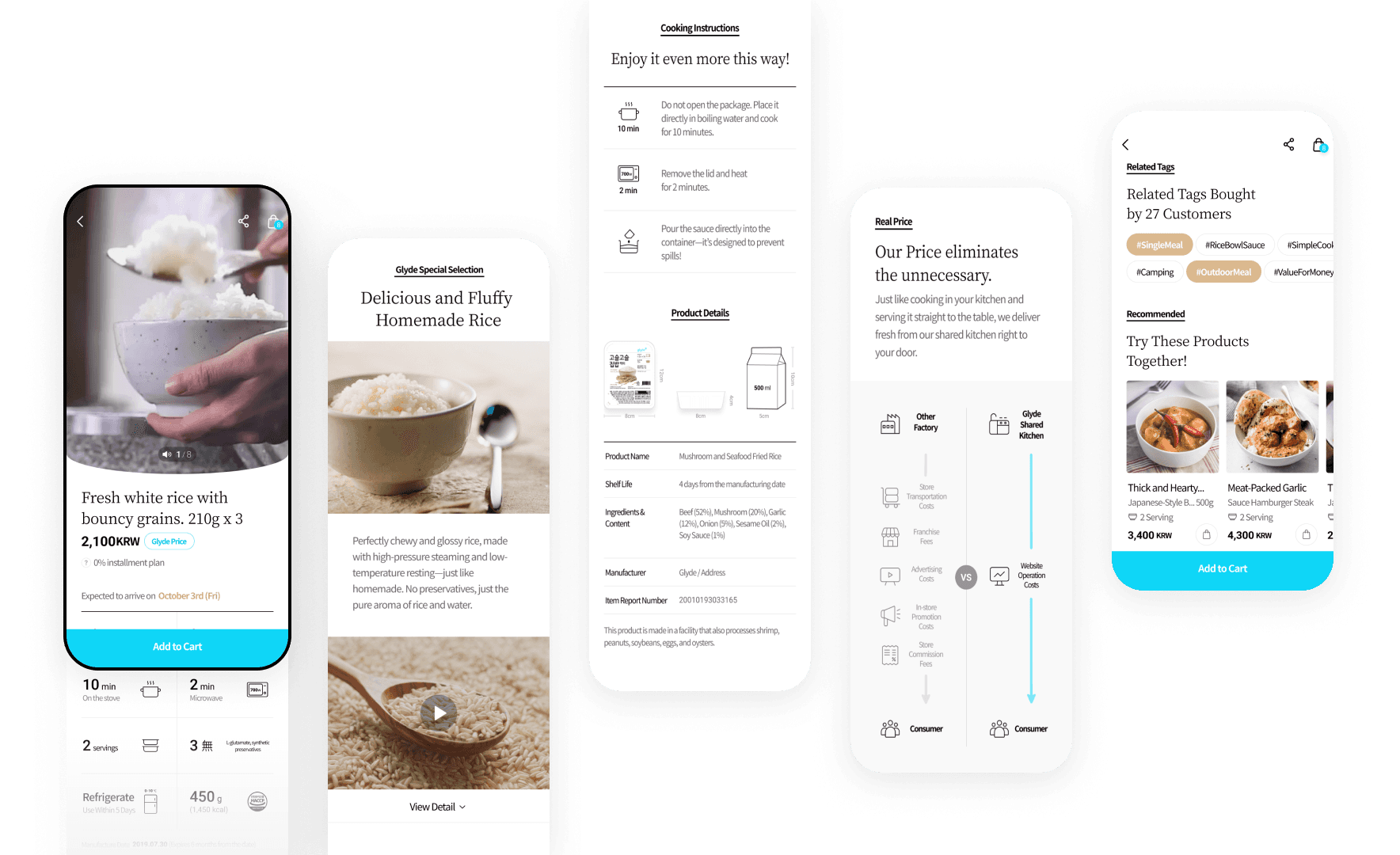
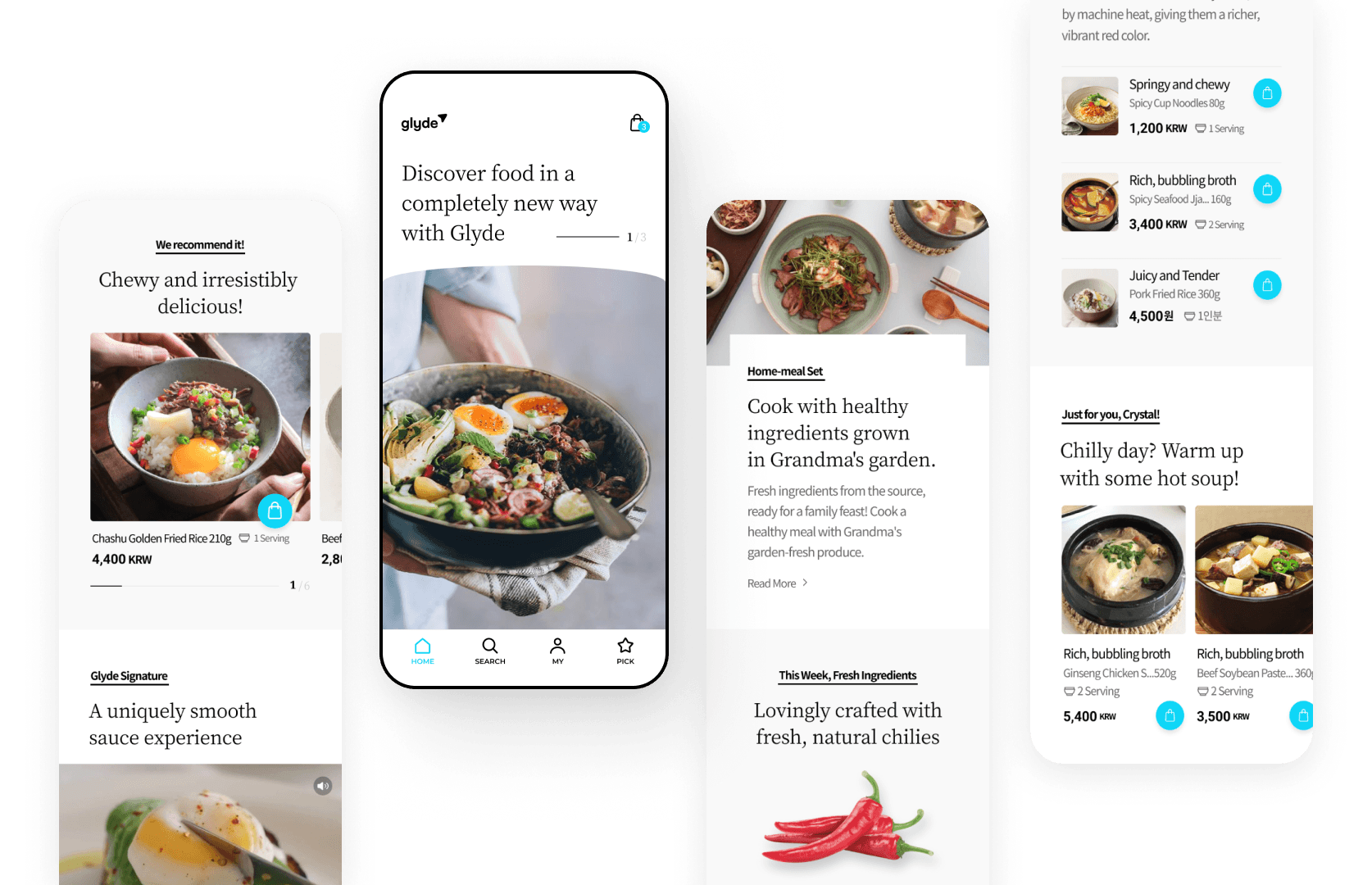
Story-driven content was structured to guide users from curiosity to purchase without breaking context.
Cognitive Friction
Too many choices, labels, and visual signals increase fatigue, especially during repeat purchases.
Design Response
Visual hierarchy and information density were carefully controlled so each screen asks only one question at a time.
Users can move through the flow without re-interpreting the interface.
Design decision
We prioritized predictability over flexibility, because uncertainty at arrival breaks trust faster than inconvenience.
Design Solution 3
Build trust through clarity, not persuasion
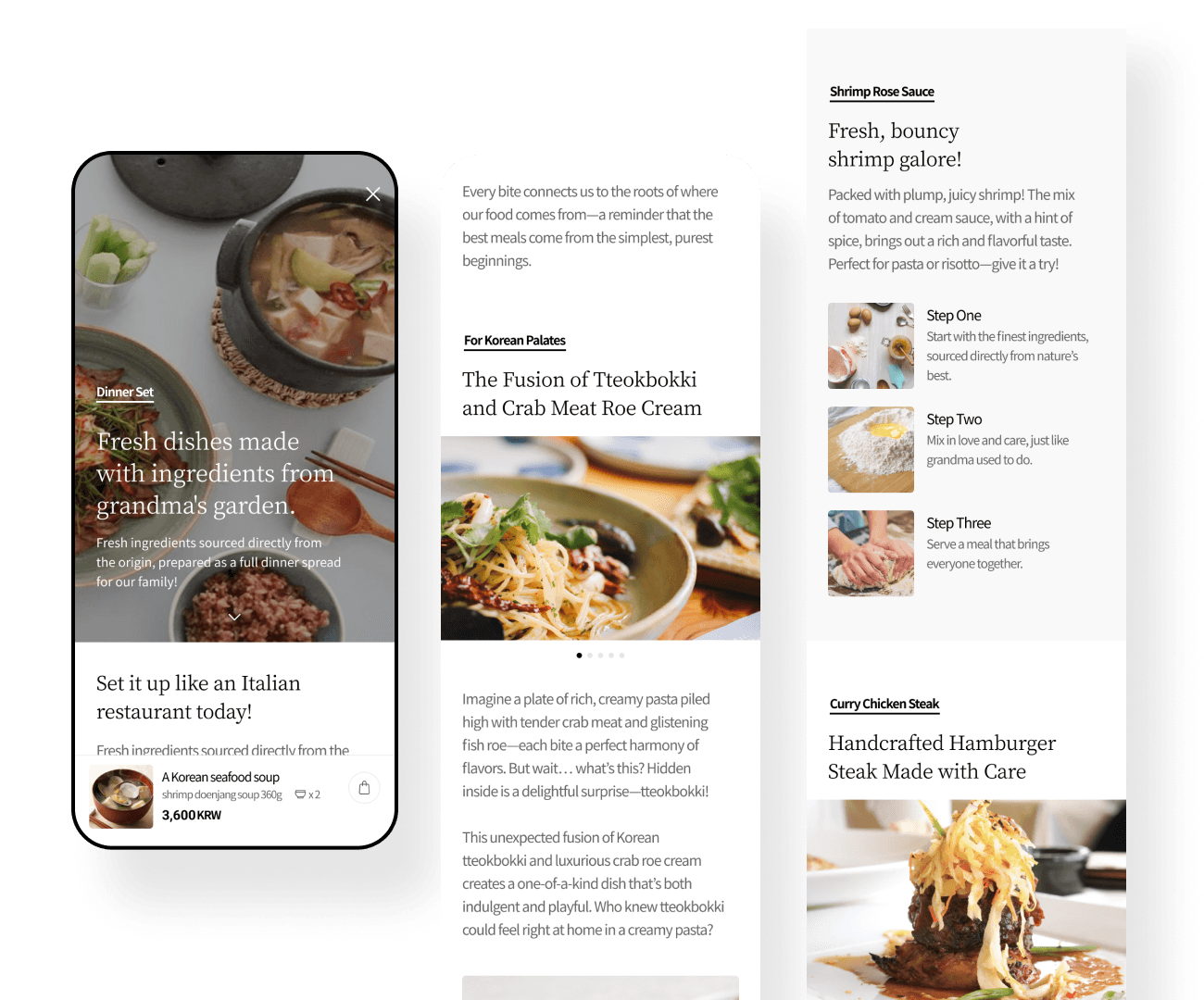
Story-driven content was structured to guide users from curiosity to purchase without breaking context.
From Story to Purchase, Without Disruption
This experience keeps commerce one step away, never interrupting the story.
Design Intent
The goal was to design a content experience that builds emotional connection and product understanding, while keeping purchase one step away at all times.
Instead of separating content and commerce, related products were embedded contextually, allowing users to move from reading to buying without leaving the story.
Why this works
Story builds trust before price is introduced
Instructions reduce uncertainty before purchase
Products appear as a natural continuation of the narrative
Content becomes a decision aid, not a distraction.

Real-world context where predictability becomes trust
Design Solution 4
Visual System: Icons & Illustration
I led the design of icons and illustrations used across the platform, creating a unified icon set that supported clarity and reinforced the brand’s friendly, everyday tone.
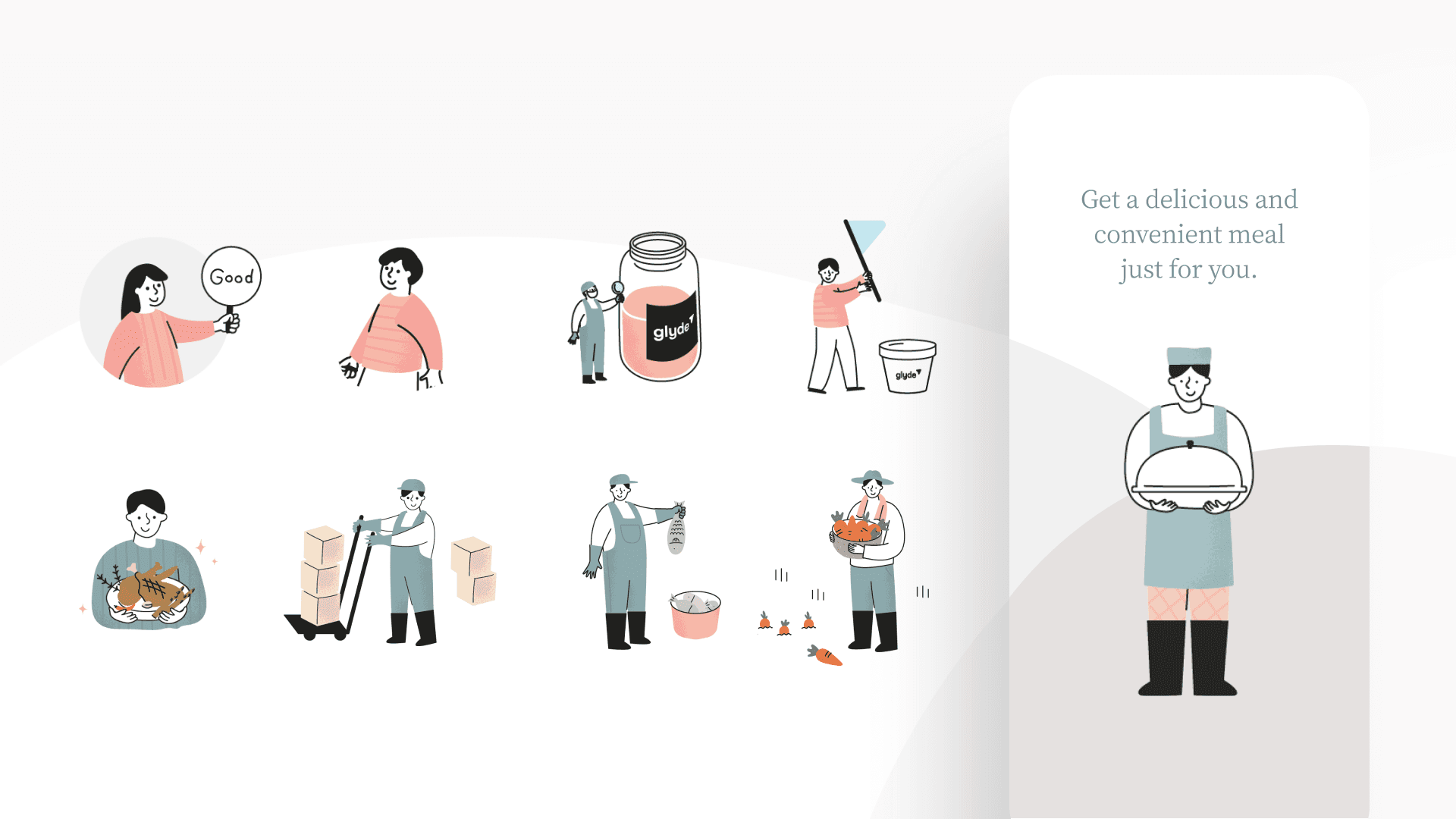
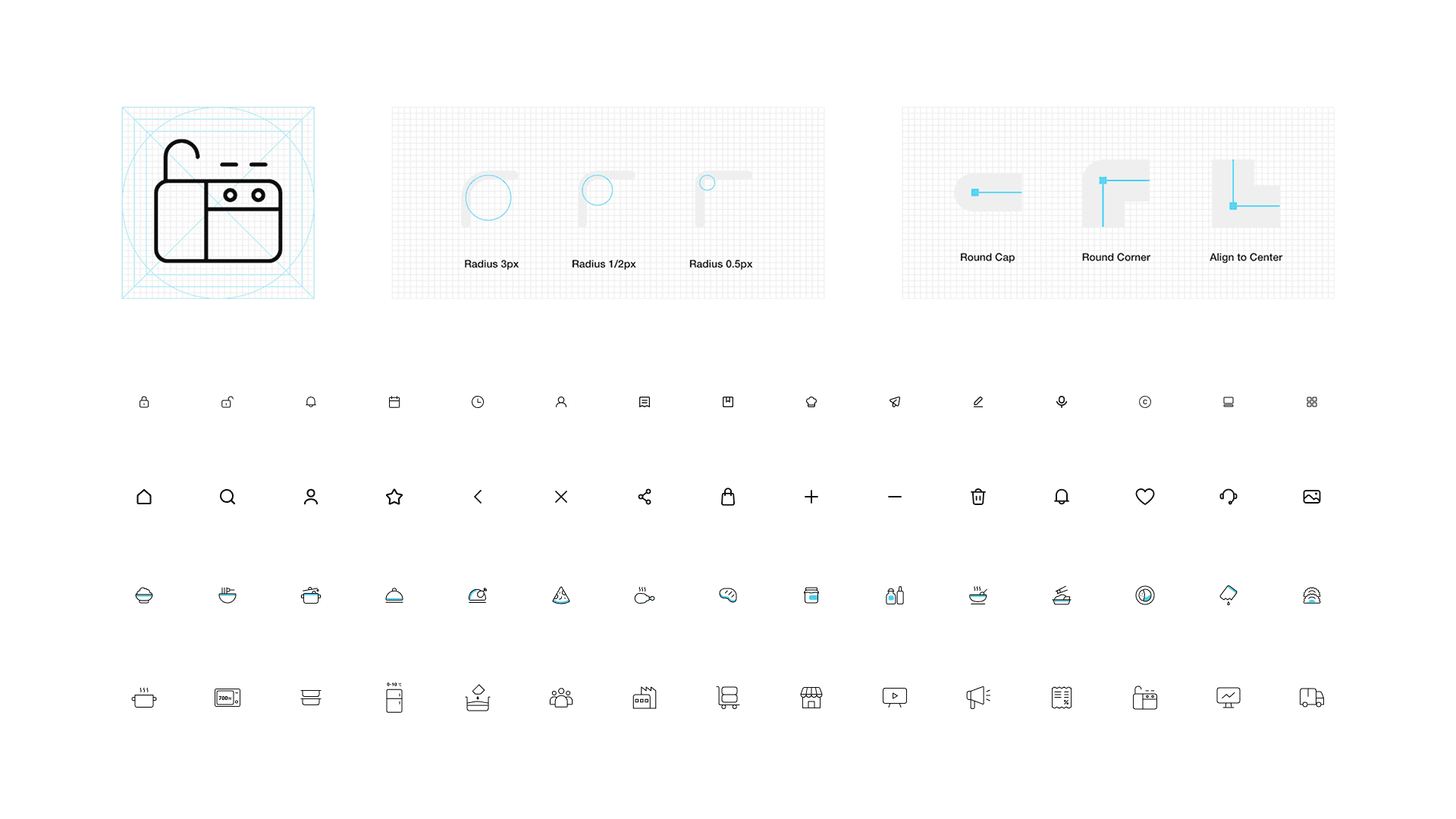
The icon system was applied consistently across navigation, actions, and supporting UI elements.
Collaboration & Execution
I worked closely with other product designers and iOS/Android engineers to ensure design decisions were realistic, scalable, and aligned with platform constraints.
Rather than focusing on ideal states, we validated layouts, interaction patterns, and motion behaviors through continuous handoff and implementation feedback, especially for trust-critical moments such as product detail, cart, and payment flows.
Focused on execution quality and cross-functional alignment to ensure design intent survived real-world implementation.
Outcome & Learnings
The product launched successfully as a D2C e-commerce platform, receiving positive feedback from internal stakeholders for its clarity, usability, and consistency across the shopping flow.
More importantly, this project reinforced several key learnings that continue to shape my design approach:
1
Clarity reduces hesitation more effectively than persuasion
When users understand what will happen next, they move forward with confidence—without needing additional prompts or incentives.
2
Storytelling is most effective when embedded, not separated
Product narratives worked best when integrated directly into the browsing and purchasing flow, allowing users to move from understanding to action without context switching.
3
Trust is built through predictability, not abundance of options
Clear structure, consistent patterns, and restrained visuals proved more valuable than flexibility when designing for everyday, repeat decisions.
Thank you.
This project reinforced the value of simplicity in e-commerce design and the importance of aligning business philosophy with everyday user experiences.