Structuring how business goals were translated into product decisions, team workflows, and design execution from operational ambiguity
31% faster UX design handoff
Design ops transformation
Team mentorship
Duration
May 2025 – Present
Role
Senior Product Designer / Team Lead
Team
CEO
Director of Operations
Business & Operations Team
Technical Team
Creative Team (myself, 3 junior designers, and 1 sales marketing assistant)
External Stakeholders
Contribution
Product Strategy
Translated ambiguous business goals into clearer digital touchpoints, service narratives, and execution priorities.
Workflow Systems
Redesigned design operations by centralizing intake, standardizing workflows, and reducing design-to-handoff time by 31%.
Team Enablement
Led the operating structure for a team, mentoring 3 junior designers and coordinating with 1 sales marketing assistant through weekly 1:1s, design reviews, onboarding systems, and clearer ownership models.
This project in a nutshell
Why
As Siwon scaled across multiple business units, design operated reactively, slowing engineering handoff and weakening alignment with front-end teams.
What
I led the redesign of our product workflow system, turning fragmented design execution into a scalable, dev-ready handoff process.
How
Audited task timelines to surface bottlenecks, restructured request intake, and streamlined communication across design, product, and front-end teams.
Impact
Reduced design-to-handoff lead time from 4.2 → 2.9 days (31% faster), with clearer ownership and design ops built to scale.
The Core Challenge
"How might we turn fragmented business needs into systems that teams can use, scale, and maintain?"
The challenge was not only to produce better design outputs, but to turn fragmented business goals into clearer product touchpoints, reusable systems, and scalable workflows.
Product Problem
The company did not only need better visuals. It needed better systems.
01
Unclear service communication
The company’s services and business direction were not clearly translated into digital and business-facing touchpoints.
02
Fragmented design operations
Requests, assets, feedback, and approvals were spread across different people and channels, creating repeated clarification and slower execution.
03
Weak internal information architecture
Teams could not easily find the right files, guidelines, or latest materials without asking individual owners.
04
People-dependent execution
The creative function relied heavily on individual follow-ups instead of shared workflows, ownership, and reusable systems.
05
Growing team without a scalable operating model
As the team expanded, the challenge shifted from producing more outputs to creating a system for quality, ownership, and collaboration.
My Role
Senior Product Designer as a system builder
I led the work across four layers:
Impact
Reduced design-to-handoff lead time from 4.2 to 2.9 days.
Built a centralized intake and handoff system across design, operations, and tech.
Scaled the design function from sole designer to a 5-person creative team.
Product Strategy
Translated ambiguous business goals into clearer digital touchpoints, service narratives, and execution priorities.
Systems Design
Structured internal tools, documents, workflows, and touchpoints into reusable systems.
Design Operations
Improved request intake, handoff, QA, and cross-functional collaboration.
Team Enablement
Built review practices, onboarding structures, and role clarity to scale design quality across a growing team.
Strategy
Treat the organization as a product ecosystem
Instead of solving each request as an isolated design task, I mapped the company’s recurring friction points:
How teams request design support
How business direction becomes product and design work
How teams find files, assets, and shared context
How stakeholders review and approve decisions
How team members understand ownership
How external-facing materials communicate credibility
This shifted the work from:
A
One-off outputs → repeatable systems
B
Scattered requests → structured intake
C
Visual outputs → structured communication systems
D
Individual dependency → team ownership
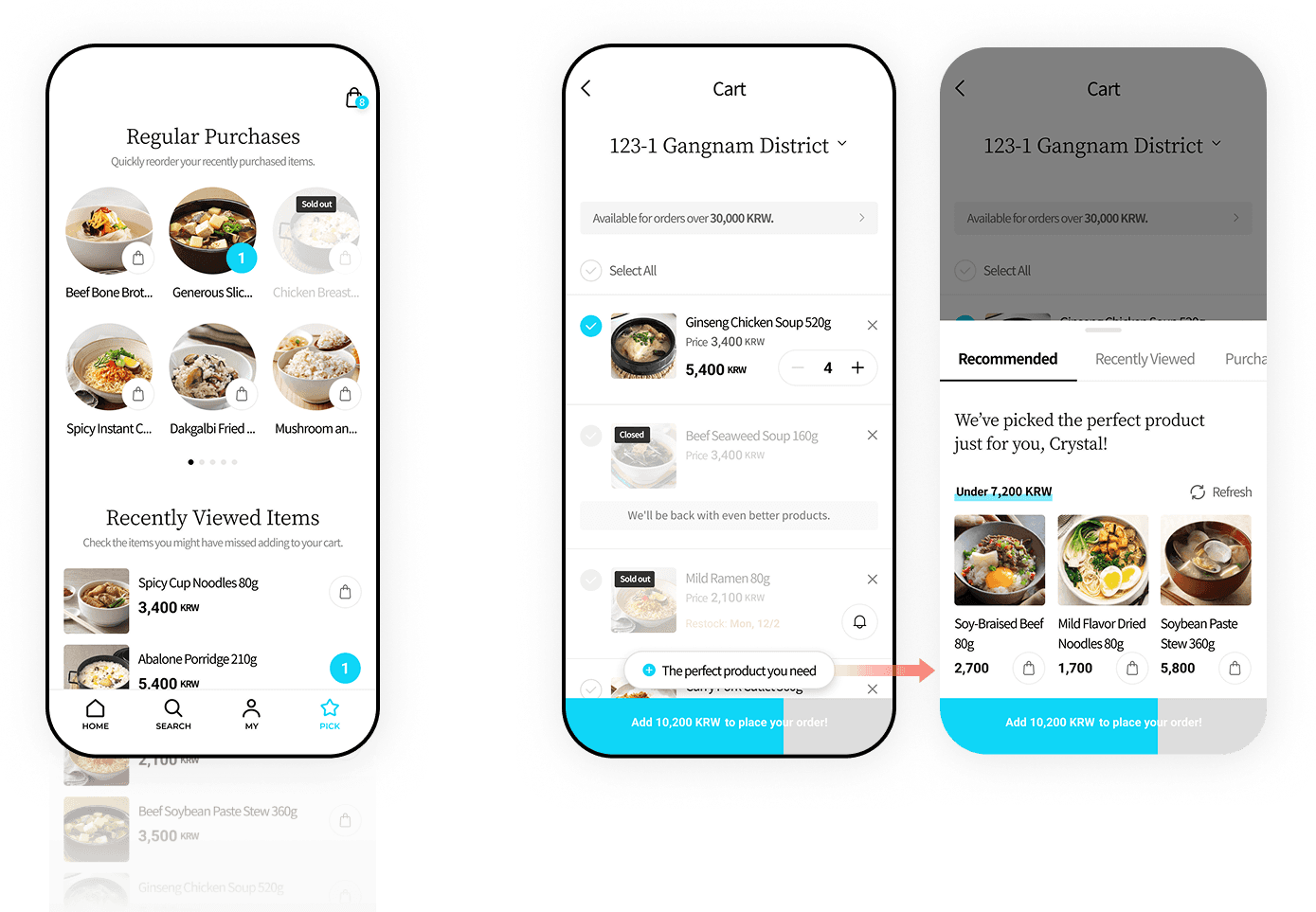
From recognition → action → confirmation, without detours.
Workstream 1
Designing Internal Workflows as User Journeys
Challenge
Design and business requests were coming from multiple directions without a clear intake, routing, or ownership structure. This created delays, duplicated effort, and repeated clarification.
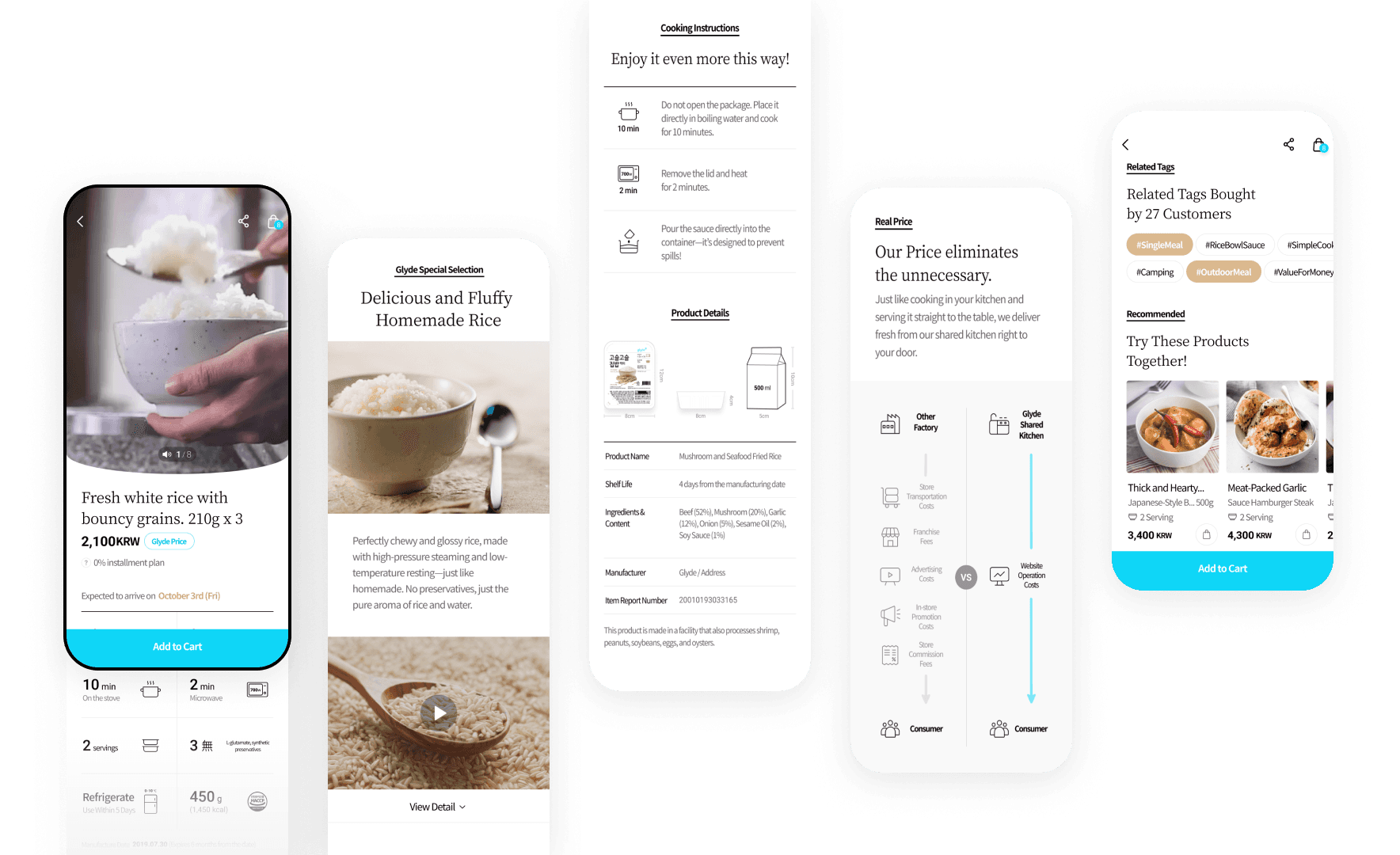
Story-driven content was structured to guide users from curiosity to purchase without breaking context.
What I did
Reorganized Google Drive into a clearer internal information architecture.
Built Notion as a shared operating space for visibility, ownership, and weekly updates.
Standardized recurring updates, responsibilities, and handoff expectations.
Clarified request routing across creative, operations, and business stakeholders.
Created assignment formats to define focus, scope, goals, outputs, and working rules.
Product design framing
I treated internal workflows as user journeys.
The users were internal teams, and the pain points were scattered context, unclear ownership, and repeated follow-ups. The solution was a clearer operating system that made work easier to find, request, review, and hand off.
Impact
Improved visibility across teams.
Reduced repeated clarification.
Made onboarding and task allocation easier.
Helped the creative function move from reactive support to structured execution.
Workstream 2
Designing Service Communication Touchpoints
Challenge
Siwon needed a clearer way to communicate what it does, who it serves, and why stakeholders should trust it across digital, investor-facing, and internal touchpoints.
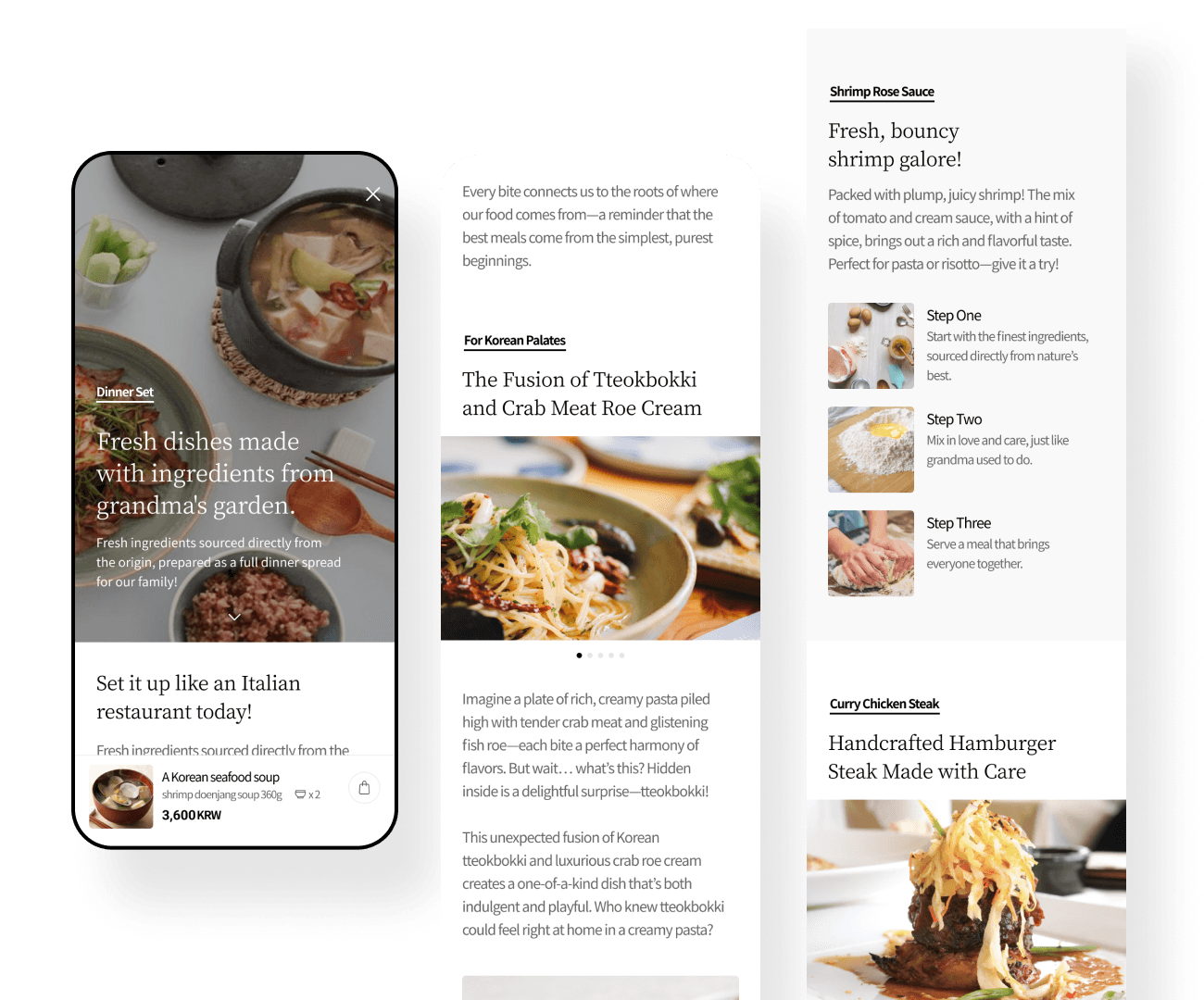
Story-driven content was structured to guide users from curiosity to purchase without breaking context.
What I did
Planned and designed the corporate website end-to-end.
Structured business content into clearer service narratives.
Designed investor-facing decks and business communication materials.
Built reusable layouts for documents, presentations, and official assets.
Created a unified content hierarchy across major business touchpoints.
Product design framing
The website, IR deck, and corporate materials were treated as service communication products.
Each touchpoint had to answer:
What does the company do?
Who is it for?
Why should stakeholders trust it?
How should information be structured for fast understanding?
Impact
Improved clarity in external communication.
Supported investor-facing and business development conversations.
Created reusable structures for future communication assets.
Strengthened consistency across digital and physical touchpoints.
베트남, 중국 잠재 투자자로부터 투자 유치에 성공했습니다.
Workstream 3
Design Operations & Handoff System
Challenge
As the workload expanded, design quality was not the only issue. The bigger issue was how work moved between teams.
Without standardized handoff, QA, and communication structures, execution speed depended too much on manual follow-ups.
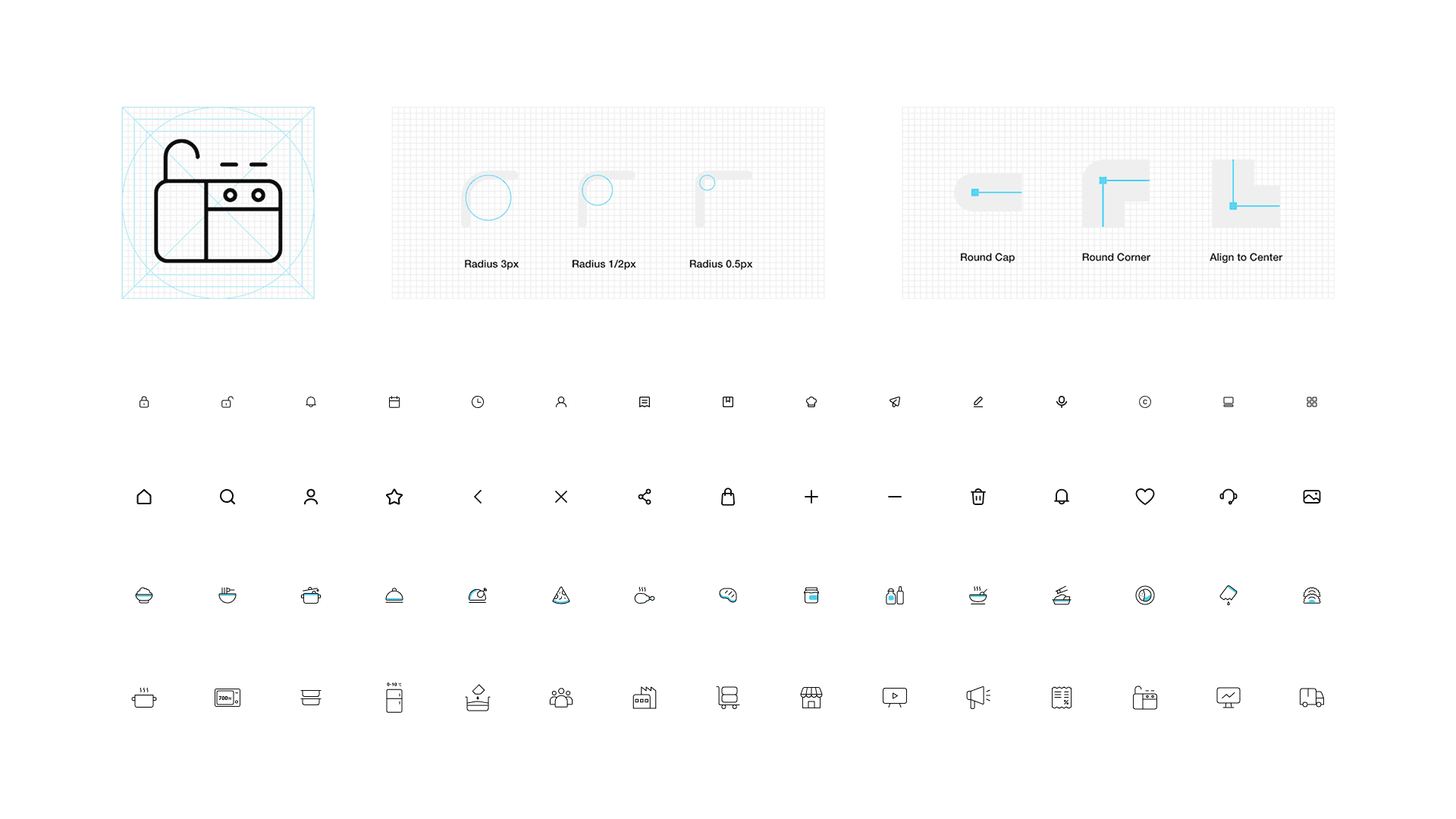
The icon system was applied consistently across navigation, actions, and supporting UI elements.
What I did
Centralized design-related communication and request handling.
Standardized task routing and review flows.
Created QA and tracking systems.
Clarified handoff expectations between design, operations, and tech.
Reduced reliance on scattered messages and informal follow-ups.
Tracked team workflows over a 4-week period to identify bottlenecks and optimize routing, review, and handoff.
Impact
Reduced average design-to-handoff lead time from 4.2 to 2.9 days, improving execution speed by approximately 31%.
Why it mattered
By improving how work moved from request to review to handoff, the team could spend less time clarifying context and more time executing higher-quality work.
Workstream 4
Aligning Stakeholders Around Product Direction
Challenge
Business direction often came from multiple stakeholders, but priorities and ownership were not always clear. This created ambiguity for the team and slowed execution.
Story-driven content was structured to guide users from curiosity to purchase without breaking context.
What I did
Worked directly with executive leadership and senior stakeholders.
Translated high-level business goals into actionable product and design direction.
Clarified ownership across creative, operations, and e-commerce stakeholders.
Used R&R documentation to reduce ambiguity.
Created alignment materials before execution.
Presented design-driven strategies to leadership.
Product design framing
The goal was to improve decision quality before execution started.
By translating abstract business direction into clearer scopes, priorities, and design decisions, I helped the team reduce ambiguity and move with more confidence.
STARs와 연결 필요
Workstream 5
Scaling Design Quality Through Team Systems
Challenge
I joined as the sole in-house designer, but the company’s design needs quickly grew beyond what one person could sustainably execute.
The challenge became:
How can we scale design quality without relying on one person?
Story-driven content was structured to guide users from curiosity to purchase without breaking context.
What I did
Grew and led a design/creative team of 5. (Myself, 3 designers, and sales marketing assistant)
Introduced weekly 1:1s and structured design reviews.
Built onboarding structures for new team members.
Created role-based assignments and weekly planning systems.
Encouraged early sharing, proactive questioning, and cross-checking.
Mentored junior designers through structured feedback.
Product design framing
This was not just people management.
It was a design quality system.
The goal was to create a repeatable structure where team members could understand context, make better decisions, and improve output quality without waiting for constant direction.
Key Impact
Product & System Impact
Turned fragmented business needs into clearer digital touchpoints, workflows, and communication systems.
Created reusable systems for documents, assets, stakeholder alignment, and handoff.
Improved internal information architecture through Google Drive and Notion structures.
Reduced design-to-handoff lead time from 4.2 to 2.9 days (-31%).
Business Impact
Improved external credibility through clearer website and investor-facing materials.
Translated business direction into structured service communication touchpoints.
Supported executive alignment through clearer product and design strategy.
Team Impact
Scaled the design function from first in-house designer to a team.
Built onboarding, 1:1s, review routines, and role clarity.
Improved team visibility, accountability, and quality control.
Reflection
This project expanded how I define product design.
At Siwon, the most important design work often happened before the interface in how problems were framed, how teams aligned, how workflows were structured, and how business goals became usable systems.
I learned that product design is not only about improving the user-facing experience. It is also about creating the conditions for better decisions, clearer execution, and scalable collaboration.